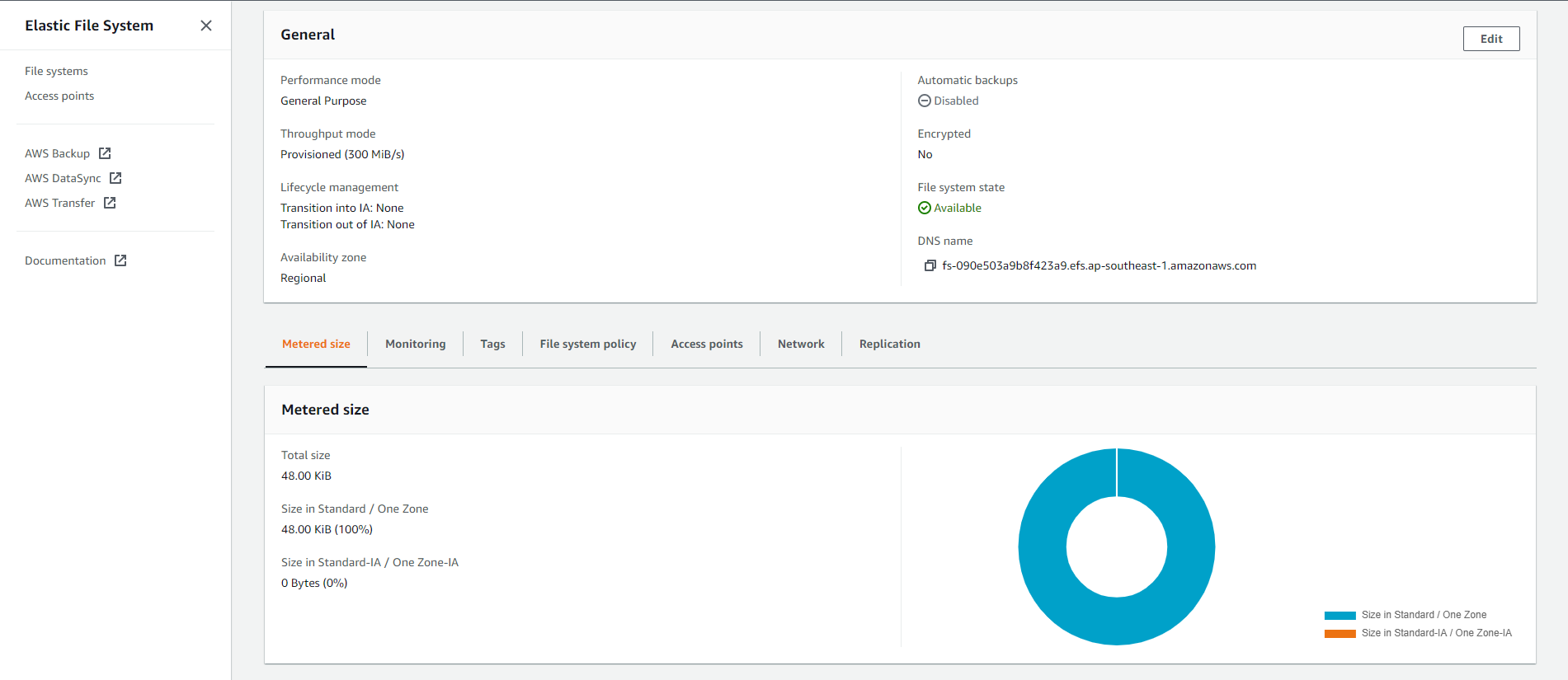
Optimizing IOPS
Optimize EFS IOPS with multiple threads
This Lab will present 1,024 different file generation methods and compare the performance of each method.
- In the CLI, run the following command to create 1,024 non-byte files. Record the time to complete.
directory=$(echo $(uuidgen)| grep -o ".\\{6\\}$")
mkdir -p /efs/tutorial/touch/${directory}
time for i in {1..1024}; do
touch /efs/tutorial/touch/${directory}/test-1.3-$i;
done;

- In CLI, run the following command to create 1,024 zero byte files using multiple threads. Record the time to complete.
directory=$(echo $(uuidgen)| grep -o ".\\{6\\}$")
mkdir -p /efs/tutorial/touch/${directory}
time seq 1 1024 | parallel --will-cite -j 128 touch /efs/tutorial/touch/${directory}/test-1.4-{}

- In the CLI, run the following command to create 1,024 non-byte files in multiple directories using multiple streams. Record the time to complete.
directory=$(echo $(uuidgen)| grep -o ".\\{6\\}$")
mkdir -p /efs/tutorial/touch/${directory}/{1..32}
time seq 1 32 | parallel --will-cite -j 32 touch /efs/tutorial/touch/${directory}/{}/test1.5{1..32}

-
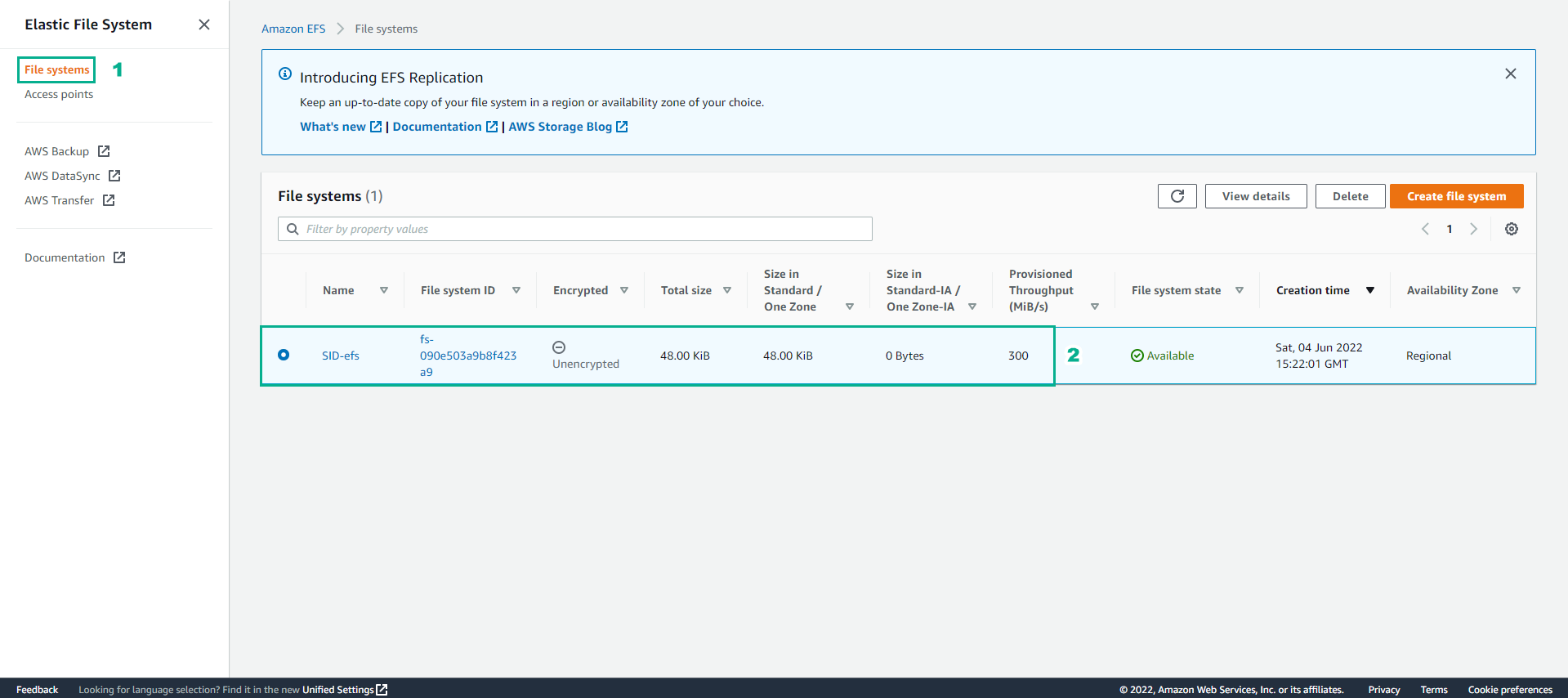
Access to Elastic File System
- Select File systems
- Select SID-efs
- The best way to take advantage of Amazon EFS’s distributed data storage design is to use multiple threads and inodes in parallel.